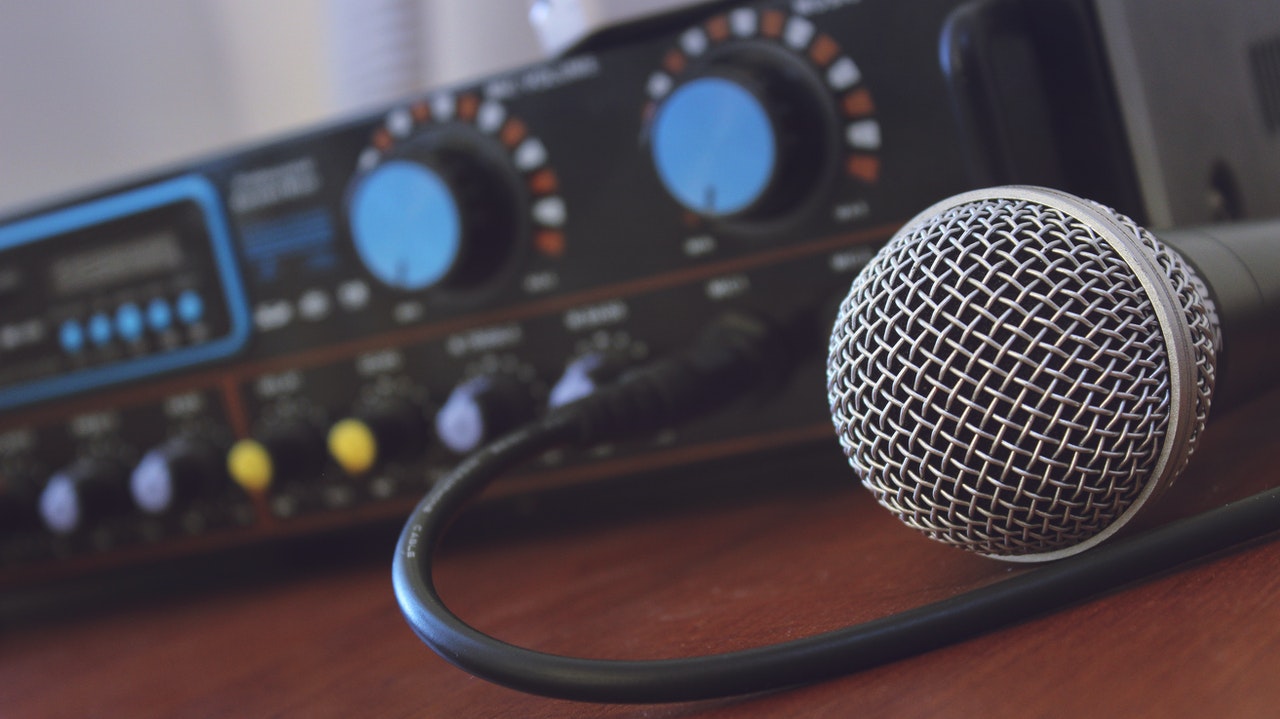
It is useful and popular these days to present material through recordings. Blogs and articles are nice, but for some kinds of material, viewers would rather click "play" than spend 5 minutes grueling over raw text. Ideally, setting up a recording will involve a good microphone with a good camera in a good location. But sometimes we can't get that trifecta. Especially when we are on a money or time limit. So if we have to start prioritizing one of those three over another, which do we make cuts to?
Let's first look at the purpose of each
The purpose of the microphone is to capture just your voice or your surrounding environment. The quality of microphone will determine how loud, how clear, and how pure the sound is. Different microphones can interact better with certain environments.
The purpose of the camera is to capture just your own self or your topic. The quality of camera will determine how crisp, how 'bright', and how smooth your image is. Different cameras can interact better with certain environments.
The purpose of your environment is to provide a visual and auditory baseline which will enhance the quality and outcome of your project. The environment will determine how 'echo'-like the audio is, how balanced your colors are, and how much attention will be on your subject.
So which of the three is most important?
While I would like to say "it depends" there is really a clear winner in almost every circumstance. It's the microphone. Let me tell you why. We shall assume we are working on a project which requires you, the producer, to speak. If its a silent nature film, or a brief advertisement with music and headlines, then that's not our scope here. Here we are working on something which has a speaking subject.
Why does the microphone win out most of the time? Mostly because it's the starting point. In most kinds of projects, filming a subject with the camera is optional. Even if you want to produce a video, there is a lot of merit to using a visual presentation with voice-over. The reason boils down to the purpose of your project: every project is intending to communicate. The video camera, while it can communicate a lot with its look, is supplementary to the speech which holds the message. Since the message is contained in the speech, that is where we must start.
Think of a project where someone has an awesome video camera. The shot looks great! But the sound is all corse and grindy. It's low volume, sounds like a bathroom, and most important of all: it's hard to understand. Compare that to a still image video with titles and bullets, but the voice is clear, loud, not obnoxious, and 'bright'. Which would you rather watch for 2-5 minutes? How about for 40 minutes of a lecture?
So when you are planning your project, consider your resources at hand. Always start with the microphone. Can your subject be heard clearly? Next, get the right environment. There's no use adding a video camera unless your have a solid place to shoot. You want each element to add to the end result. If any part detracts from the quality of the product, then leave it out. Be willing to spend $500 on a microphone before spending $2000 on a camera. It's not only cheaper; it's going to give you a better product, so long as you shape your product around what you have.
sic loquimini et sic facite sicut per legem libertatis incipientes iudicari